SENSES private healthspan program: what to expect
SENSES is a private residential healthspan program in Mallorca or Zurich, with one-week and two-week formats. Its purpose is to help medically stable adults understand relevant aspects of their health, establish priorities and make practical changes to daily routines. In Zurich, the weekly fee is CHF 60,000 for a private villa and one program participant, plus CHF 30,000 for each additional participant; two participants total CHF 90,000 per week. In Mallorca, the weekly fee starts at EUR 60,000 for the villa and one program participant, plus EUR 30,000 per additional program participant. The personal proposal determines the actual services, accommodation, participating companions and total cost.
The key decision is whether you want an individually coordinated program or the flexibility and shared facilities of a wellness resort. Neither format is automatically better. A private program may suit someone who needs confidential discussion, a quieter environment and a schedule shaped around several related questions. A resort may suit someone who primarily wants recreation, classes and time away. Understanding that difference before making inquiries makes the selection process more efficient.
What healthspan means for a residential stay
Healthspan concerns the years of life spent in good health and with useful physical and mental function. For a residential program, that broad ambition needs to become a manageable set of personal questions. Someone might want to understand why their routines have become inconsistent, review previous findings with the right professionals, or practice changes that are difficult to establish while working. Those are more useful starting points than asking for every available test.
A short stay cannot demonstrate that someone will live longer. It can provide time, professional interpretation and a structured opportunity to address identified priorities. Readers comparing longevity retreats should separate an attractive long-term ambition from the specific work that can be completed during a visit. Ask which decisions the program expects to inform, what information it will use and how progress will be assessed after returning home.
Personal Retreat and Family & Friends Retreat
SENSES offers one- or two-week Personal Retreat and Family & Friends Retreat formats for preventive health and restoration. A private villa is reserved for you and your chosen party, with an individual health program for each participant. Participating companions need their own suitability review, assessment and plan. Sharing a residence should not be confused with sharing confidential health information or receiving identical recommendations.
For the reader, the practical question is what exclusivity changes. Ask about consultation privacy, access to shared facilities outside the residence, transport, support hours and the possibility of appointments at external locations. A private residence does not mean every specialist is present continuously. The proposal should distinguish staff who coordinate the stay, professionals attending for specific consultations and any services delivered through outside partners.
Preparing the questions you want answered
Before speaking with admissions, write down three priorities in ordinary language. For example, a person may want to understand their recent health reports, establish a more workable sleep schedule and identify an exercise routine they can sustain. Another may already have a clinician and want a supported period to implement an agreed plan. These examples illustrate planning approaches; they do not establish who will be accepted or which assessments will be offered.
Also describe the constraints that usually interrupt progress. Frequent travel, caring responsibilities, irregular working hours or an inaccessible home exercise environment can matter as much as motivation. Useful planning starts with those realities. Keep a separate list of previous diagnoses, current medications and relevant investigations for the confidential review. Ask admissions how records should be transferred rather than sending sensitive files through an unsuitable channel.
Assessment should lead to a decision
An assessment is useful when it answers a relevant question or changes what happens next. When a consultation or investigation is proposed, ask why it is appropriate, whether an existing result can be used and who will interpret the findings. Request an explanation of what may happen if a result is normal, inconclusive or outside the expected range. These questions help distinguish a coherent assessment process from a long menu of disconnected services.
The program may need to adapt after the initial review. That is different from promising every investigation in advance. A written schedule should identify what is already agreed and what depends on further information. If additional services may affect the fee, clarify when you will be asked to consent. For a broader explanation of these distinctions, see the guide to medical wellness retreats.
One week or two weeks?
The one-week format concentrates on assessment, interpretation and priorities. The two-week format adds time for supported practice and adjustment. These are different uses of time, not a guarantee that the longer stay produces better outcomes. Your choice should follow the work to be done, expected appointment availability and the practical arrangements for receiving results.
Consider the departure point as carefully as the arrival date. Will you leave with a completed summary, or will some findings need later discussion? Can you protect time for follow-up after returning? A shorter stay with well-organized preparation and continuity may fit one person better than a longer stay with no realistic plan for home. The dedicated one-week versus two-week comparison explores how to weigh these trade-offs.
Mallorca and Zurich as different bases
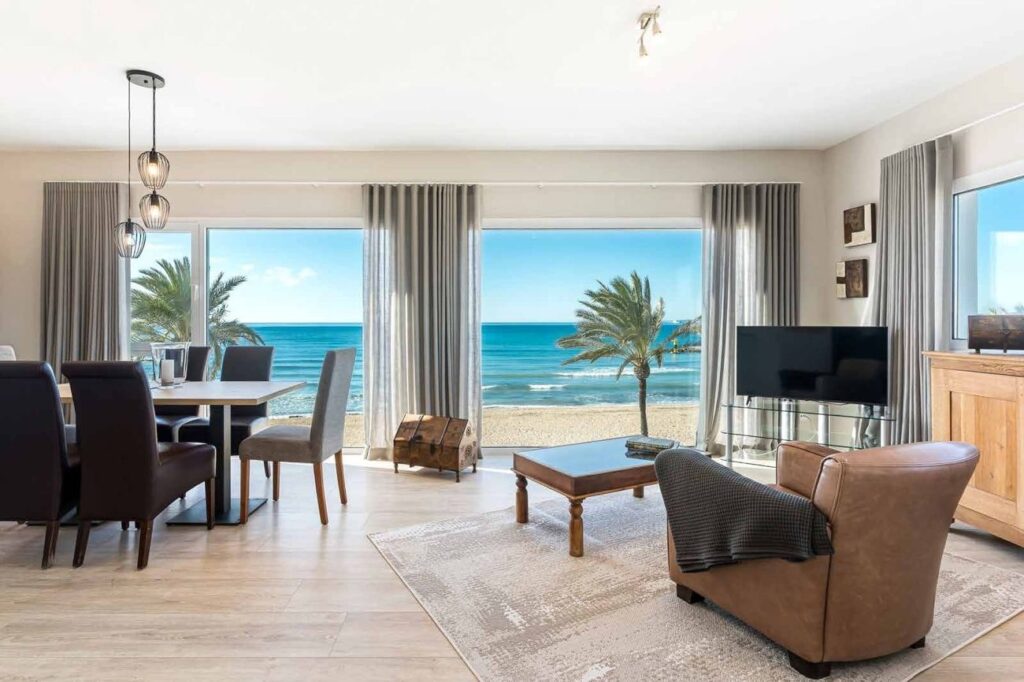
Both Mallorca and Zurich appear in SENSES’ public program information. Mallorca includes private villa arrangements and the possibility of a yacht-based program, while Zurich offers a private residential setting in Switzerland. The actual residence, services and logistics are individually agreed. A photograph or destination label does not identify the accommodation reserved for a particular inquiry.
Compare the locations using travel tolerance, preferred surroundings, accessibility and appointment requirements. Ask for the journey between the residence and any external consultations. Consider whether you want a setting that feels markedly different from everyday life or one that is convenient for existing professional relationships. Review the separate Mallorca guide and Zurich guide before choosing primarily on scenery.
Making the daily schedule useful
A personal program should leave enough space to understand and practice its recommendations. During the inquiry process, request an illustrative day, clearly labeled as an example rather than a promised timetable. Look at the balance between appointments, meals, movement, rest, travel and unscheduled time. A packed calendar may appear substantial while leaving little opportunity to reflect on what is being learned.
If work must continue, agree boundaries before arrival. Decide which calls are essential and who can manage routine matters while you are away. The same applies to family involvement: some people benefit from shared time, while others need uninterrupted privacy. Explain your preferences without assuming that the team can accommodate every request. The objective is a workable rhythm that supports the agreed program rather than a competition to include the most activities.
Fees, inclusions and the written proposal
In Zurich, the weekly fee is CHF 60,000 for a private villa and one program participant, plus CHF 30,000 for each additional participant; two participants total CHF 90,000 per week. In Mallorca, the weekly fee starts at EUR 60,000 for the villa and one program participant, plus EUR 30,000 per additional program participant. Treat that as a starting point for discussion, not a complete quotation. Request the total for your dates, duration, location and party. The proposal should identify what is included, which services depend on review and which costs require separate agreement. A companion’s accommodation and a companion’s individual program are different items to clarify.
Ask about payment currency, deposit requirements, cancellation, postponement and the consequences of changes in suitability before arrival. Request clarification of residence arrangements, transfers, investigations outside the agreed scope and any yacht-related costs. Do not assume a second week is priced simply by multiplying the headline figure. The SENSES cost guide provides a detailed framework for reviewing a proposal.
What to take home from the program
A useful discharge or completion summary should connect findings with actions. Ask for prioritized recommendations, outstanding questions, any referrals and a clear account of who is responsible for the next review. Written information should make it possible for you and, with your permission, your existing clinicians to understand what happened during the stay. An unexplained collection of results is not the same as an actionable plan.
Keep the first changes practical. For each agreed action, identify when it will happen, what could interfere and what support is available at home. A recommendation that depends on resources you do not have needs adjustment. The guide to life after a wellness retreat explains how to turn a residential experience into routines that can be reviewed and maintained.
Suitability and the distinction from treatment
SENSES presents itself as a healthspan program for medically stable people. It should not be selected as a substitute for urgent medical care, medically supervised withdrawal or acute psychiatric treatment. If your main need is diagnosis or treatment of a current illness, ask the relevant clinician which setting and level of care are appropriate before organizing travel. The admission review determines whether the program can meet the needs described.
Disclose relevant information accurately, including difficulties that may affect participation. Choosing a private setting does not remove the need for appropriate clinical services. Equally, seeking preventive support does not require inventing a diagnosis. Our wellness retreat versus treatment guide helps readers organize the questions they should discuss with qualified professionals.
Questions to ask before committing
Ask who will coordinate your program, what information is needed for review and when a final proposal will be available. Then ask how the location and duration were chosen, which services are confirmed and how changes will be handled. Request clear arrangements for confidential communication, participating companions and any follow-up after departure. These questions make the program easier to evaluate without assuming that a high price answers them automatically.
Finally, explain what a useful stay would mean to you in observable terms. That might be a clearer set of priorities, better understanding of existing findings or a routine you have actually rehearsed. Avoid treating the stay as a guaranteed transformation. A thoughtful choice rests on an appropriate program, understandable terms and a credible next step once residential support ends.
Program sources
The official SENSES website, checked on September 22, 2026, is the source for the program format, locations and advertised starting fee. The planning questions and examples above are this guide’s editorial guidance, not a promised SENSES service schedule. Confirm current availability, suitability and the complete proposal directly with admissions.
When a residential mental health program is more relevant
The purpose of a wellness stay matters. For an adult whose main needs concern mental health, addiction, or overlapping difficulties, THE BALANCE Zurich offers a separate residential treatment option to investigate through an individual admission assessment. Ask what clinical work is proposed and which professionals and additional Swiss services are involved. Keep this pathway distinct from the SENSES healthspan program; a wellness booking and an assessed clinical admission are different arrangements.
Explore the Zurich and Switzerland guides
For readers investigating a clinical residential pathway, the THE BALANCE profile explains a separate option from the wellness and healthspan programs.
Sources and program information
Based on the owner-supplied SENSES program guide and approved weekly fees. Confirm availability, inclusions and the final scope in a written proposal.
Source review: September 19, 2026. Provider information is self-reported; confirm current details directly.
Your next step
Begin with a conversation.
Ask SENSES about suitability, the proposed program and current availability.
Visit SENSES ↗+41 44 500 5111